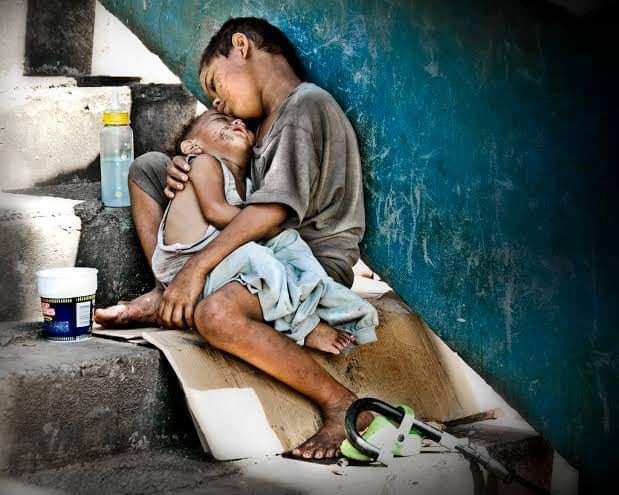
With over 17 million inhabitants, Manila keeps on growing. The city is the capital of the Philippines and one of the most spread out megalopolises in the world. Estimates suggest that in the shadow of unplanned and rapid development, between 250,000 and 1 million children live in the streets. Left to fend for themselves, they are easy preys for gangs and trafficking. Often living one day at a time, they need help, more so than anyone else.
The children we meet in the streets are between 7 and 20 years old. Some of them try to earn a living by doing small street work such as filling the jeepneys , begging, gathering clients for vendors in the markets or sorting rubbish. By working thus, they earn in between 50 and 120 pesos every day .
However, most of the children we meet loiter in the streets, they often end up sniffing glue. Some of them belong to gangs, trapped in the grasps of adults who are part of trafficking networks. These children are much harder to meet, their gang tattoos allow them to recognise one another, they depend on their gang’s boss, whom their fear, but who can also defend them.
STREET CHILDREN: IT CAUSES AND SOLUTIONS
A society that is not well care for, will later be a harmful gains to the individual who live in it. So many things goes on in the society we live in; it may be a big or small society. After all, a society started from the family; an individual homes made up the society.
The term street child refers to a boy or girl who has not reached adulthood and for whom the street has become a habitual abode and/or source of livelihood; and who is inadequately protected, supervised, or directed by responsible adults or society. In the same way, street children could also be poor or homeless children below the age of an adult who spend all or high quality time living and hawking on the streets of a city, town, or village.
Street children come from all walks of life, from all around the world. Many street children come from structurally disadvantaged homes with poor living conditions. Parental loss through deaths or shortages of housing force children onto the streets in order to survive. In a nutshell, children who are from poor families in our societies are likely to find themselves on the streets, since the belly will not stop asking for food. According to Le Roux (w.y.) street life is an adaptive response to stress experienced by families living in poor conditions. The move onto the streets can represent a desire to take control and displace old values and habits with new ones.CAUSES
According to Lugalla and Mbwambo, 1995; there are lots of causes for this problem, some are natural and others are man-made. Children have lost contact with their parents or families, which results the loss of the children in the streets. Some children are the offspring of prostitutes. Some families reject their children if there are handicapped. Some respectable parent disowned their own child because he/she is an outcome of an affair. In those causes the background is not allows poor. A multitude of factors contribute to the global rise of street children, push factors including: poverty, violence, neglect, abuse and peer pressure. Life on the streets open up and expose these children to a world of drug addiction, sexual abused and exploitation, labor exploitation, involvement in criminal activities, and violence by police and criminal gangs. Odds are stacked against them, they being exposed to the elements, having unreliable access to food, lack of education and medical treatment and care. Addiction, abuse and illness are high, as is vulnerability.
Possible solutions
Street children problems:To reach out the problems of the street children and how to help street children who are facing a number of problems including protection, shelter, limited access to food and the education, we may go to them directly to know the intensity of their problems. We may not be able to help them out from getting them out of all their problems, but perhaps we can solve some of them.
Public awareness:
Many of the public do not even know about the street children. Awareness mean that the we can inform as more people as we can about the problems of the street children and what can we do to help street children. The increasing of the public awareness can be very helpful in this regard. We can state the people by telling the stories of different kinds of street children. By sharing the problems of the street children to those who even do not know about the problems faced by the street children and what can we do to help street children. For this, we need to go to the door to door to make the people sure that they are ready to help out these children.
Development centers should be risen:
Development places are the best organizations and the services for street children. If we want to help the street children, there is dire need to analyze the problems of these children and know the ways of how to help street children. Development centers help the street children at large scale as they know more about their problems and know the better solutions to their problems. These development centers offer and provide the street children all the facilities that the common children enjoy at their homes. These centers never let the children feel that they are in the centers, not in their home. The goal of the development centers in how to help street children for street children are to make them ready to take part in all the healthy activities of life.
The role of schools
The role of education in how to help street children is always to create the big personalities for the country and the world. The schools can take these children to schools to decrease their number. But the schools can also prepare the children so that the children may not resort to the negative activities such as drug addiction, especially for street children. Schools can teach the children and help the child to become an engineer, a doctor, or a pilot as the others normal children. In this way, they can decrease the number of schools children.
5 Ways to help street children
1.Talk to them in a positive tone, and inquire about their well-being
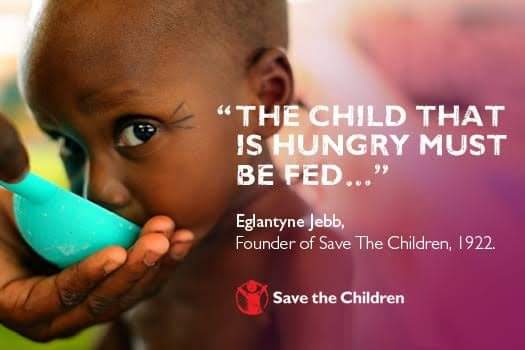
While street children are taught to only communicate while begging and thus expect a brusque refusal, you can give them a kind voice by asking them their name, background and other particulars. But don’t give them food or alms – instead donate online to organised child welfare initiatives like the campaigns run like NGO the most trusted child rights NGO, Save the Children. Their personal details can be used to introduce them to a benevolent NGO system which will seek to give them nutrition, health, and healing.
- If the child looks distressed then report to local Child Welfare Committee or police
Using the rapport you have built with the child, you can inquire about how their parents or caretakers are treating them. If the child mentions abuse, or shows signs (include violence, drug addiction, or malnutrition), you should immediately report him to the relevant authorities. These include the local Child Welfare Committee or the police.
- Volunteer at a Centre for street children
After money, Inspires and motivate them on doing good things.
4. Donate to charity and do fundraising for NGOs.
Donating is the easiest, and fastest act of support you can participate in. The equivalent of a cup of coffee or the next movie you’re watching can go towards giving a child a better future. And, you can also sign up and be a part of an NGO’s various fundraising initiatives – either on social media, or in on-ground activities at malls, kiosks, and public places.
- Campaign for NGOs
It is the ordinary people who are seen as the most sincere voices of children and their needs. Through social media, as well as by reaching out to people in your network, you can drive awareness of NGO campaigns, their goals, etc…
GRAFT and CORRUPTION

Graft:
When government employees or elected officials allocate public funds, they are expected to act in the best interests of the public by awarding contracts to the most competitive bidders in a fair and honest procurement process.
When an official abuses their authority by undermining the procurement process and misdirecting public funds to benefit specific private interests, their actions may be characterized as po
What is Graft?
Graft is a form of political corruption that involves the misdirection of public funds by a government official for the benefit of private interests.These interests are often private companies where the corrupt official owns a financial stake or has friends who will pay kickbacks or bribes in exchange for preferential treatment.
Political grafting takes place in decision-making situations where public officials are directed to choose a supplier for goods and services or select the winning bid for a government contract. A corrupt official would award the lucrative contract to a “friendly” company, often at a cost that substantially exceeds the fair market rate.
This “friendly” company might then compensate the corrupt official with a financial kickback or pay bribes to other government officials to continue circumventing proper oversight.
What is an Example of Graft?
Political graft takes place anytime a public official misdirects public funds to benefit private interests. We can point to several examples of political graft that have come to light throughout history:
In 1972, political leaders in Baltimore, Maryland were investigated by the Maryland District Attorney’s Office for a grafting scheme that involved engineering firms, architects, and construction contractors. The investigation discovered that public officials were preferentially awarding contracts to select firms in exchange for financial kickbacks. This led to charges against government officials for corruption and tax fraud.
In 1984, Pennsylvania’s State Treasurer awarded a no-bid $4.6 million contract to a California-based accounting firm. It later came to light that the contract was overpriced by millions of dollars and had been inappropriately awarded due to the promise of a $300,000 kickback.
In 2013, staff members and appointees of New Jersey governor Chris Christie were accused of political grafting after they appropriated public funds to reduce the number of lanes on the George Washington Bridge. This was done for the sole purpose of creating traffic jams to punish the constituents of Fort Lee after Fort Lee’s Mayor Mark Sokolich declined to support Christie’s bid for re-election.
Is Grafting Illegal?
While there is no law that explicitly condemns political grafting, the act of grafting almost always includes a violation of anti-corruption laws.
In the United States, a government official who intentionally misdirects public funds for personal gain may be found guilty of defrauding the United States. Additionally, the crime of bribery is committed if a public official seeks, receives, or accepts anything of value in exchange for misusing their influence or the authority of their office. This makes it a crime for a public official to accept kickbacks from private companies in exchange for contracts.
Finally, a corrupt public official who purchases a financial stake in a company in order to subsequently award the company a lucrative contract and benefit from an anticipated increase in the company’s stock price maybe found guilty or insider trading.
EFFECTS OF GRAFT AND CORRUPTION
In a nutshell, corruption increases inequality, decreases popular accountability and political responsiveness, and thus produces rising frustration and hardship among citizens, who are then more likely to accept (or even demand) hard-handed and illiberal tactics.
CORRUPTION: CAUSE AND CONSEQUENCE
Corruption is a constant in the society and occurs in all civilizations; however, it has only been in the past 20 years that this phenomenon has begun being seriously explored. It has many different shapes as well as many various effects, both on the economy and the society at large.Among the most common causes of corruption are the political and economic environment, professional ethics and morality and, of course, habits, customs, tradition and demography.
Its effects on the economy (and also on the wider society) are well researched, yet still not completely. Corruption thus inhibits economic growth and affects business operations, employment and investments. It also reduces tax revenue and the effectiveness of various financial assistance programs.
The wider society is influenced by a high degree of corruption in terms of lowering of trust in the law and the rule of law, education and consequently the quality of life (access to infrastructure, health care). There also does not exist an unambiguous answer as to how to deal with corruption. Something that works in one country or in one region will not necessarily be successful in another. This chapter tries to answer at least a few questions about corruption and the causes for it, its consequences and how to deal with it successfully.
OVERPOPULATED
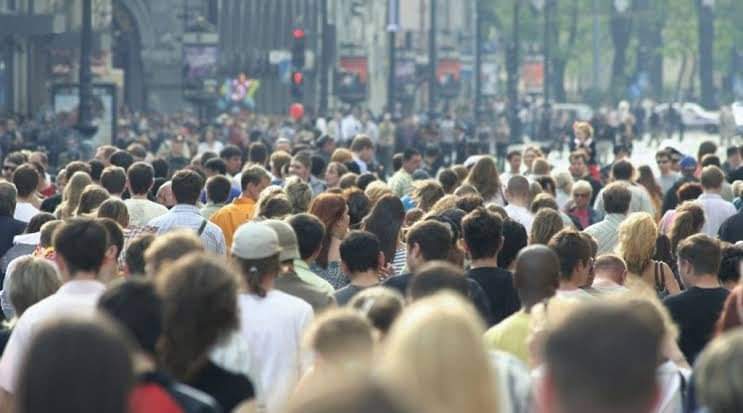
Overpopulation in the Philippines had been increased for the past 5 years. Right now it’s one of the major concern of our government. The number one factor of it is unemployment.
Causes Of Over Population
Causes of Overpopulation are different for many countries but are mostly associated with poverty, reduced mortality rates, poor medical access, poor contraceptive use, as well as immigration. With overpopulation comes a decrease in resources and an increase in symptoms of illness and disease. There are a number of factors that contribute to overpopulation. These are the leading causes:Causes Of Over Population
Causes of Overpopulation are different for many countries but are mostly associated with poverty, reduced mortality rates, poor medical access, poor contraceptive use, as well as immigration. With overpopulation comes a decrease in resources and an increase in symptoms of illness and disease. There are a number of factors that contribute to overpopulation. These are the:
°Poverty
°Poor Contraceptive Use
°Child Labor
°Reduced Mortality Rates
°Fertility Treatment
°Immigration
°Poverty is believed to be the leading cause of overpopulation. A lack of educational resources, coupled with high death rates leading to higher birth rates, result in impoverished areas seeing large booms in populationThe effect is so extensive that the UN has predicted that the forty-eight poorest countries in the world are also likely to be the biggest contributors to population growth. Their estimates state that the combined population of these countries is likely to balloon to 1.7 billion in 2050, from 850 million in 2010..
Poor Contraceptive Use
Though the availability of contraceptives is widespread in developed countries, poor planning on both partners’ parts can lead to unexpected pregnancies. Statistics have shown that in Great Britain 76% of women aged between 16 and 49 used at least one form of contraceptive, leaving a quarter open to unexpected pregnancies.
This issue is exacerbated in underdeveloped areas. A study by the World Health Organization (WHO) shows that this usage figure drops to 43% in countries that are blighted by issues like poverty, which leads to higher birth rates.
Child Labor: As distressing as it may be to hear, child labor is still used extensively in many parts of the world. UNICEF estimates that approximately 150 million children are currently working, primarily in countries that have few child labor laws.
This can result in children being seen as a source of income by impoverished families. Furthermore, children who begin work too young also lose the educational opportunities they should be granted, particularly when it comes to birth control.
Reduced Mortality Rates
Improvement in medical technology has led to lower mortality rates for many serious diseases. Particularly dangerous viruses and ailments such as polio, smallpox and measles have been practically eradicated by such advances.
While this is positive news in many ways, it also means that people are living longer than ever before. This “delay” in the cycle of life and death has led to birth rates outstripping death rates by over two to one in modern times.
Fertility Treatment
Though it only plays a minor role in comparison to the other causes of overpopulation, improved fertility treatments have made it possible for more people to have children.
The number of women using various fertility treatments has been on the rise since their inception. Now most have the option of conceiving children, even if they may not have been able to do so without such treatments.
Immigration
Unchecked immigration into countries may lead to overpopulation to the point where those countries no longer have the required resources for their population. This is particularly problematic in countries where immigration numbers far exceed emigration numbers.
In some cases, immigrants may be attempting to escape overpopulation in their own countries, only to contribute to the same issues in the countries they move to. However, data also exists to show the immigration can bolster economies, with the effect in the UK being particularly pronounced.
Effects Of Overpopulation
Effects of overpopulation mainly involve the number of resources required to support a large population, which can lead to a great deal of pollution and other detriments to the environment. In many countries. the rapid use of these resources can have a negative impact on healthcare and destroy the land we live on.
Lack of Water
Lower Life Expectancy
Extinction
Resource Consumption
Increased Intensive Farming
Faster Climate Change
 Site Title